

The Question Behind the Question
In my experience, the question “what is a marketing strategy?” usually arrives attached to: I am spending a lot of money on marketing, and I can’t tell if it’s working.
A co-owner of a $4 million Atlanta company put it plainly in a recent conversation. The terms were unfamiliar, and the monthly reports were hard to read. He was spending real money and needed to understand what it was buying.
He’s right to want that. Understanding where the money goes starts with a plain answer to a basic question: what is a marketing strategy? The American Marketing Association offers a useful place to start, and it separates marketing into three components.
The AMA’s Three Components of Marketing
- Marketing strategy — the business goals and the approach to achieving them. A well-defined strategy “aligns all marketing activities” and keeps a business from wasting resources.
- Marketing techniques — the methods a business uses to carry out the strategy, meaning how it reaches its audience and delivers its message. In marketing, we call those channels. Think content marketing, email marketing, social media marketing, search engine marketing, and word-of-mouth marketing.
- Marketing tactics — the specific actions that put each technique to work, and the place where results become measurable. For example, a three-month ad campaign that sends visitors to a specific page and counts how many become paying clients.
In real life, digital marketing agencies use the word strategy to describe the technique and the tactics they use to grow visibility.
Marketing strategy, on the other hand, matches market opportunities with a business’s strengths, digs deep into the client experience to find unique differentiators, finds the best ways to create loyalty, then determines which techniques are best to:
- Attract the ideal client
- Build trust with them along their decision-making process
- Convert them into a buyer
- Provide excellent client experiences
- Encourage them to purchase again
- Encourage them to refer more clients just like them
Lead generation is one part of a marketing strategy. The strategy covers the whole client relationship, from the first time someone hears the business name through the day they send a friend.
Where Marketing Strategy Sits in Planning
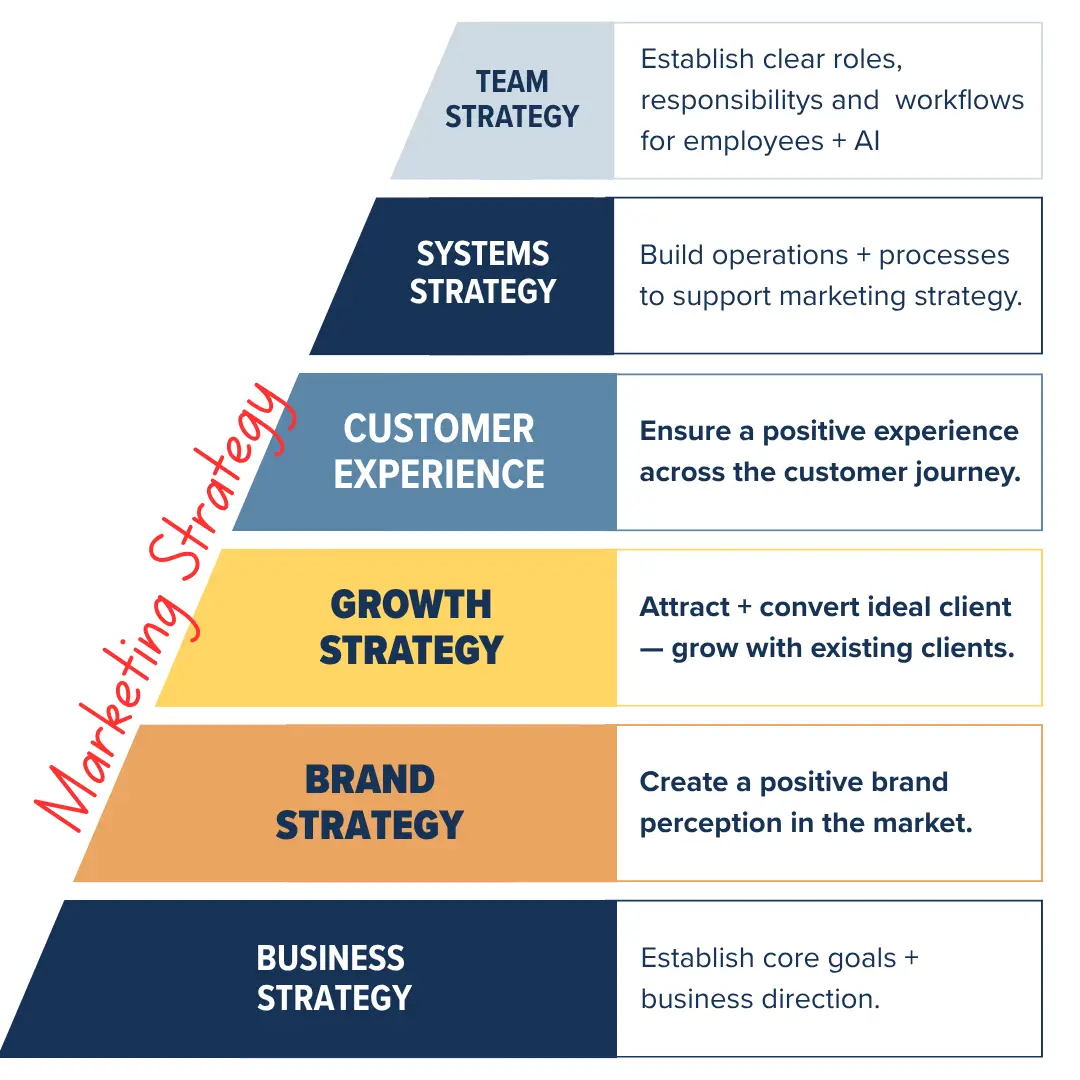
I often say “marketing is business infrastructure,” and this image of a business strategy hierarchy shows just what I mean.
Marketing strategy covers three strategic core business practices:
- Brand Strategy
- Growth Strategy
- Customer Experience Strategy
Business strategy sits at the foundation and sets the objectives and goals. Systems strategy and team strategy come after brand, growth, and customer experience because those two practices carry out the work that achieves the objectives and moves the business toward its long-term goals.
Put another way, marketing strategy creates a successful marketing plan and operationalizes the business’s long-term goals.
Business Strategy — Where the Goals Come From
Business strategy is the practice that sets the profit targets and market share objectives everything else in the business works from. It sets the direction for who the business serves, how it plans to grow, and where the owner wants the business to be.
Setting that direction takes deep research of the current market, not just a look inward — a SWOT analysis to determine:
- Where the actual opportunities exist
- What’s working against the business
- Where the strengths align with opportunities
That’s the same research that carries into brand strategy next. Owners often mistake brand strategy for a purely creative exercise, but it actually starts as a market read.
In practice, owners often arrive with goals still taking shape. So I help shape those goals and objectives based on the research we find.